Identity before activity
Readers are created in God’s image, become children of God through Christ, and must not derive their worth from role, status or achievement.
A source-led plan for two distinct biblical workbooks: one helping young people discern their future without premature pressure, and one helping adults integrate purpose with work, transition and service.
Executive recommendation
The workbooks should share one theological spine, but never feel like the same book with different examples.
| Format | Completion likelihood | Depth of reflection | Fit to audience life | Verdict |
|---|---|---|---|---|
| Daily programme | Low: a broken streak breeds guilt | Shallow per sitting | Poor against school and work loads | Rejected |
| Weekly only | Medium | Good, but easy to defer | Adequate | Partial |
| Fully self-paced | Low: postponement is frictionless | Variable | Flexible but unstructured | Rejected |
| Hybrid (chosen) | High: light rhythm plus checkpoints | Strong, spaced across the week | Best fit for both audiences | Recommended |
Both books resolve to a hybrid. Young people take a six-week cadence (three short sessions plus one optional checkpoint each week); working adults take an eight-week cadence (one deep session, two short workplace practices and a review) inside a flexible completion window.
Book and audience analysis
The book opens on a lived tension: the author’s own struggle to reconcile a demanding career with faithful service, “without feeling torn between the two”. Its subtitle, Finding the Balance, names the promise of integrating faith and work rather than compartmentalising them. The argument then begins with identity in God, moves through calling and stewardship, and ends in faithful action. Its centre of gravity is not self-actualisation but a life offered to God through relationship, work, service, character and time.
Readers are created in God’s image, become children of God through Christ, and must not derive their worth from role, status or achievement.
The primary call is to God and service. Occupations are seasonal platforms through which that calling can be expressed.
Gifts are tools, not purpose. They require character, practice, faith, perseverance and a willingness to serve beyond oneself.
Success is measured through obedience, growth, contribution and eternal significance rather than arrival, acclaim or material gain.
Purpose and profession belong together when work is understood as one instrument of God’s wider purpose. Any legitimate role can become worship through excellence, integrity, service and faithful use of what God has entrusted.
Chapters 1–3 establish identity, calling and work; 4–6 distinguish and develop gifts; 7–10 reframe success and apply purpose through worship, good works and time stewardship.
Direct second-person address, accessible exposition, frequent scripture, personal candour, memorable contrasts, extensive biblical and public-life examples, and practical action points at chapter endings.
Warm, earnest and occasionally playful. The author speaks as a fellow traveller in church and corporate life, repeatedly rejecting a sacred–secular divide and quick motivational formulas.
Nehemiah, Moses, Joseph, Peter, David, Esther, Bezalel and Oholiab, Saul, Samson, Solomon and Joshua sit alongside the author’s work experiences and examples from leadership, justice, science, sport and the arts.
The source provides rich teaching but its activities are mostly end-of-chapter. The workbooks can faithfully convert repetition and exposition into short lessons, guided discernment, experiments, reviews and accountable next steps.
Audience implication
Source atlas
Select a chapter to see its teaching burden, anchor scriptures, major examples and intended workbook use. Page references follow the book’s printed pagination. Chapter titles are set in British spelling; the source prints Chapter 8 as “Worshiping God With Your Profession”.
Workbook 01 · Young people
Position this as a guided faith-and-future journey for secondary pupils, students and early starters. Its promise is clarity for the next faithful step, not a permanent career prediction.
A 6-Week Journey to Discover Who God Made You to Be, Grow Your Gifts and Shape Your Future
Series line: A Purpose & Profession workbook inspired by Oluwatobi Adekunle’s book.Separate God-given identity from grades, popularity, appearance, family expectations and future job titles.
Notice gifts, passions, needs, feedback, opportunities and spiritual guidance without equating talent with purpose.
Use study, chores, relationships, early work and service as current places for worship, growth and contribution.
Bring prayer, scripture, counsel and seasonal awareness into subject, course, training and early career decisions.
Pair ability with discipline, integrity, perseverance, teachability, rest and continual learning.
Finish with a provisional Purpose Compass and a 90-day experiment, supported by a trusted adult or mentor.
Three sessions of 15–20 minutes each week, plus an optional 30–45 minute mentor, family or small-group review. Eighteen core sessions in total.
A rigid daily streak is vulnerable to school pressure and guilt. Pure self-pacing makes postponement easy. A light weekly rhythm gives momentum, variety and social support without infantilising older readers.
Sample page concepts
The activity mix should feel active and mature, with visual space to think. Each session follows a compact rhythm: Start Here → Scripture Lens → Make It Personal → Try It → Pray It.
Workbook 02 · Working adults
Open on the book’s core tension, the pull between career demands and a faithful life, then resolve it through integration rather than retreat. Position this for employed, self-employed and transitioning adults who need a framework robust enough for deadlines, leadership, ethical pressure, redundancy, caregiving, business decisions and changing seasons.
An 8-Week Workbook for Aligning Faith, Calling and Professional Life
Series line: A Purpose & Profession workbook inspired by Oluwatobi Adekunle’s book.Build an identity resilient enough for promotion, underemployment, career change, business volatility, retirement and redundancy.
Distinguish enduring calling from present occupation and understand how paid work, family, church and community can interact.
Evaluate gifts, character, learning, perseverance and the organisational context in which contribution becomes possible.
Translate faith into excellence, integrity, service, leadership, wise witness, prayer, gratitude and sustainable rest.
Discern whether to stay, reshape a role, prepare, transition or wait without treating frustration as automatic divine direction.
Commit to a practical pattern of purpose across role, relationships, service, time, growth, boundaries and accountability.
One 45–60 minute weekly deep-dive, two 10-minute practices during the working week, and a 15-minute review. Allow an 8–12 week completion window.
Daily pages can become another performance demand. A flexible workweek rhythm protects depth while letting readers apply ideas in live professional situations before reviewing the evidence.
Sample page concepts
Each module follows a mature work cycle: Frame → Scripture Study → Diagnose → Workplace Practice → Debrief → Pray. Cases should include employees, founders, freelancers, managers, carers and people between roles.
Shared foundation · different experience
Sample pages
Two representative facsimiles, a youth session and an adult module opening, showing the page grammar, writing space and source trail in practice. Final typesetting will refine the styling; the structure is what this phase is approving.
You don’t have to have a talent “sorted” to use it well. This week you are simply paying attention to what God has already put in your hands.
“We have different gifts, according to the grace given to us.”
Romans 12:6 · see also 1 Peter 4:10Write one thing people keep coming to you for:
Gift Evidence Board. Ask one trusted adult what they see you do well, evidence rather than praise. Note it here.
“Father, thank you for what you have placed in me. Show me who it is for.”
Worship at work is not a quieter voice or a symbol on the door. It is excellence, integrity and service offered to God in the actual tasks in front of you.
“Whatever you do, work heartily, as for the Lord.”
Colossians 3:23–24 · Matthew 5:16Rate this week from 1 to 5, then name one to raise:
Ethical Pressure Lab. Take one live situation this week and decide it as “working for the Lord”. Debrief below.
“Lord, you are my first employer. Let my work today reflect you.”
Verses are shown in a public-domain translation as placeholders; the final edition’s translation is subject to the scripture and permissions policy in the safeguards above.
Visual direction and design system
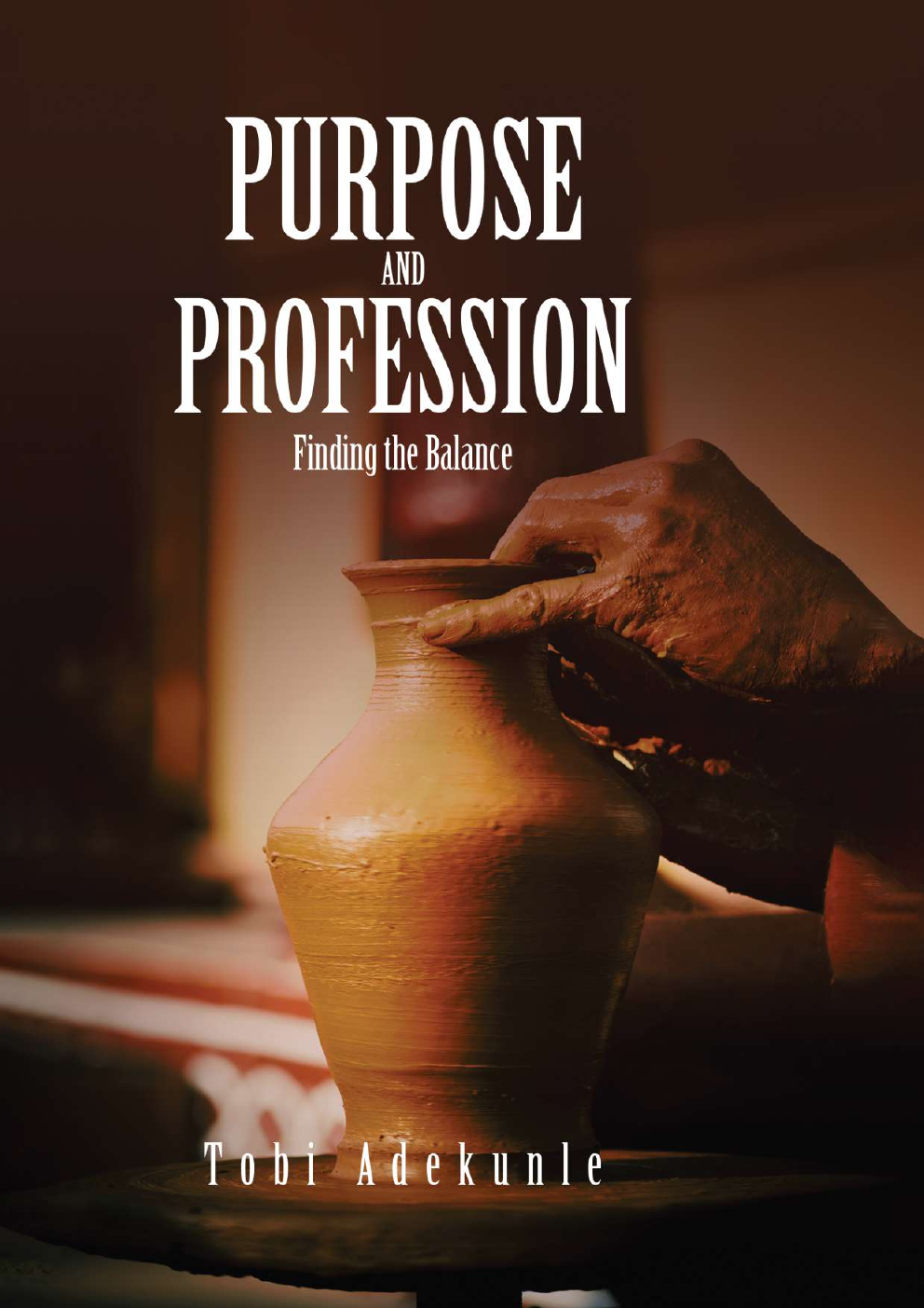
The system should inherit the cover’s dark warmth, concentrated light and craft motif while improving contrast, navigation and writing space. Premium means restraint: strong type, generous margins, quiet rules and purposeful imagery rather than decorative religious symbols.
Display: a high-contrast editorial serif that echoes the cover without copying its compressed type. Reading and activity text: a clean humanist sans serif with clear numerals, generous line height and strong small-size legibility.
Both books use the same cover family, chapter openers, source notes and clay/amber palette so their origin is unmistakable.
More open space, bolder module numerals, friendly diagrams and “choose your context” labels for school, study and starting work. Energetic, never childish.
Denser editorial rhythm, sophisticated diagnostics, workplace cases, note margins and restrained charts. Calm enough for serious reflection.
Warm-up, concise teaching, scripture study, reflection, activity, prayer, action and source trail appear in a consistent sequence without forcing every page into a box.
Concentric vessel rings, cropped hand-and-clay photography, fine contour lines and light moving across dark surfaces. No generic arrows, targets or mountain-top clichés.
High contrast, minimum 11-point print text, colour never carrying meaning alone, generous writing areas, plain-language directions and reduced-motion support in digital versions.
Assumptions, risks and editorial safeguards
The report recommends faithful adaptation, not silent correction or expansion. These points should be resolved before full drafting.
Departures from the source
The workbooks adapt the book; they do not reproduce it. Every item below is a change of format, not of doctrine, listed so it can be approved deliberately.
The ten linear chapters are re-sequenced into a six-week youth journey and an eight-week adult journey. Some chapters are paired into a single week (for example Chapters 2–3 and 4–5 for young people). Nothing is removed and the teaching order is preserved.
The source concentrates exercises at chapter ends. We convert them into short, spaced sessions, experiments, reviews and prompts across each week, drawing directly on the book’s own action points.
Two summarising tools not named in the book: a provisional “Purpose Compass” (youth) and a “90-day Rule of Work” (adults). Both assemble the book’s existing categories; neither adds new teaching.
Youth “School / Further and Higher Education / Starting Work” lanes and periodic “Notice, Name, Next” reviews are pedagogical scaffolding added for engagement, not claims drawn from the source.
Wording is adapted for each audience and to British English (for example the book’s “Worshiping” is set as “Worshipping”). Meaning and scripture references are unchanged.
Third-party authors, statistics and long quotations are paraphrased or omitted rather than reproduced, keeping the workbooks grounded in the book and its cited scriptures.
None of these departures alters the author’s theology. Anything touching doctrine (Chapter 9 on good works; the “God as ultimate employer” lens) is held for author or theological review, as set out in the safeguards above.
Approval gate
The controls save only in this browser. Generate a concise review summary to copy into your response or editorial notes.
Planning estimates for sizing the effort (indicative, not a contract): roughly 55,000–70,000 words of manuscript in total, or about 210–290 designed pages across the two books.
Recommended next steps